
A dining table is the piece a home gathers around for years, so it is worth choosing something built to last and full of character. For us, few materials do both as beautifully as reclaimed teak, and this guide explains why, honestly, including the trade-offs worth knowing before you buy.
Reclaimed teak is the wood behind most of our dining tables, so we have a clear view on it. Here is what it is, why it makes such a good dining table, how it compares to the alternatives, and how to look after it.
What is reclaimed teak?
Reclaimed teak is solid teak timber that has been salvaged and given a second life, often from old buildings, beams and structures in Indonesia that are being taken down. Rather than felling new trees, craftspeople recover this mature, decades-old wood and rework it into furniture, so each table is made from timber with a history.
Because the wood is old-growth teak that has already lived a long life, it arrives dense, stable and full of character, with a depth of grain and colour that new timber simply has not had time to develop.
Is reclaimed teak a good choice for a dining table?
Yes, reclaimed teak is one of the best woods you can choose for a dining table. Teak is naturally dense and rich in oils, which makes it hard-wearing and resistant to moisture, spills and everyday knocks, exactly the demands a dining table faces. As solid wood, it can also be sanded and refinished, so a reclaimed teak table can look new again decades from now.
That combination of toughness and repairability is why teak has been prized for hard-use and outdoor furniture for generations, and it is what lets a reclaimed teak dining table shrug off family life.

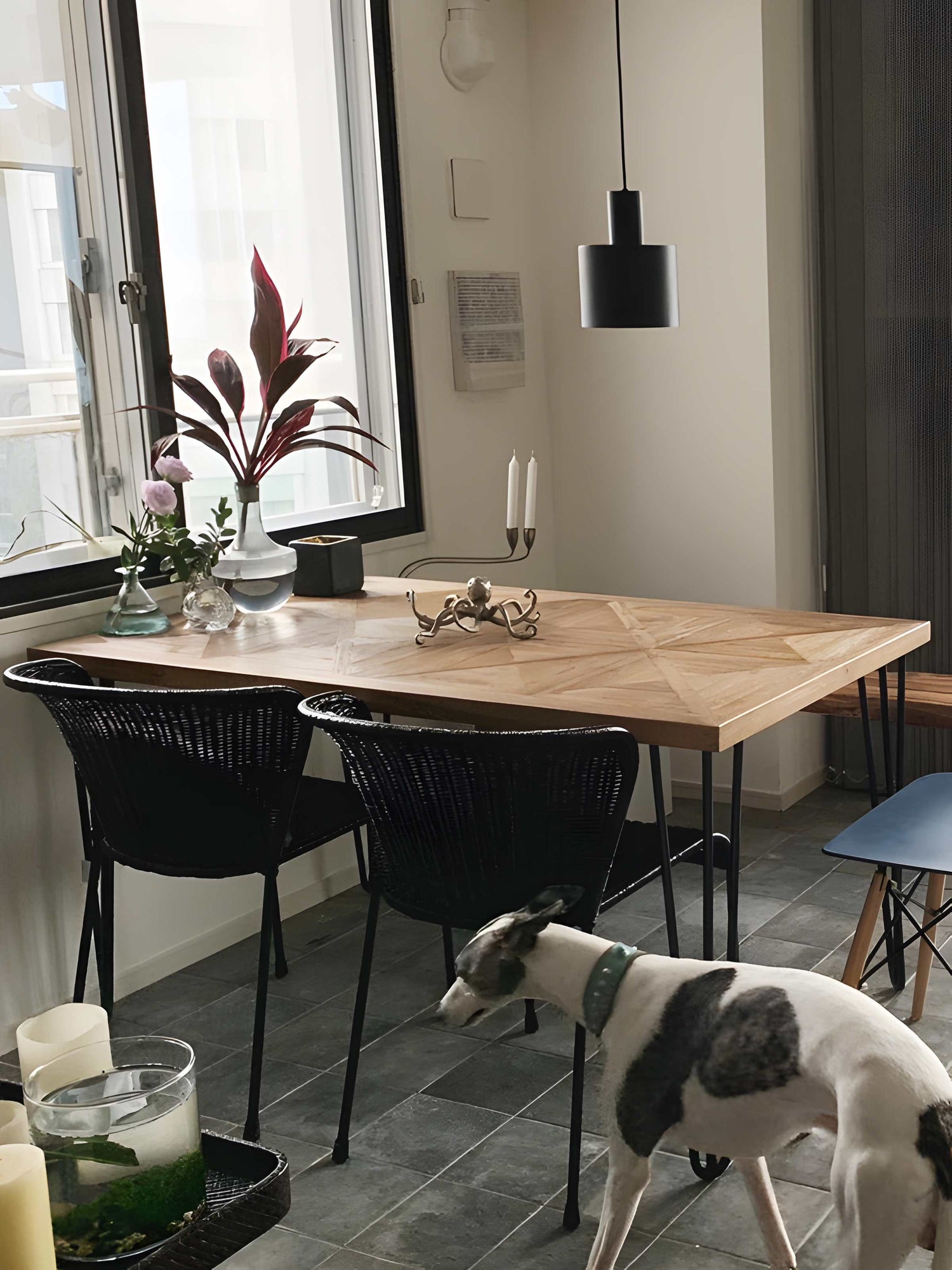
Solid reclaimed teak, hard-wearing and refinishable, with a decorative fishbone top.
View this tableWhy does reclaimed teak suit a centrally heated UK home?
Reclaimed teak is unusually stable in a UK home because it is old, fully seasoned timber that has already done most of its natural moving and shrinking over many decades. Where new solid wood can react to the dry air of winter central heating, reclaimed teak has long since settled, so it is far less prone to warping or cracking in a heated room.
That makes it a genuinely practical choice for British homes, whether you have radiators or underfloor heating, which is gentler still. A little simple care keeps it at its best, and we cover that below.
Is a reclaimed teak dining table sustainable?
Reclaimed teak is one of the more sustainable ways to buy solid wood furniture, because it uses timber that already exists rather than felling new trees. Salvaging and reworking old teak keeps prized hardwood in use and out of landfill, and our pieces are made under Indonesia's SVLK legal-timber scheme.
For anyone trying to furnish a home more thoughtfully, that reuse of mature, slow-grown wood is a real point in its favour, and it is part of why reclaimed teak has such a loyal following.
How does reclaimed teak compare to new teak or oak?
Compared with new teak, reclaimed teak is more sustainable, more characterful and often more stable, though its colour and grain vary more from piece to piece. Compared with oak, teak is oilier and more naturally water-resistant, while oak is paler and more uniform. All three are a world apart from veneer over board, which cannot be refinished and does not last the same way.
If you want a flawless, perfectly matched finish, new timber or oak may suit you better. If you want character, longevity and a lower environmental footprint, reclaimed teak is hard to beat.
Comparing your options? Read our guides to reclaimed teak and teak wood, plus reclaimed vs solid wood, teak vs oak and solid wood vs veneer.
What are the downsides of a reclaimed teak dining table?
The honest trade-offs are variation and price. Because each piece comes from different salvaged timber, colour, grain and tone vary, and you may see small filled cracks, old nail holes or areas of patina, which are part of the character but will not be to everyone's taste. Reclaimed teak is also heavy, and it usually costs more than a softwood or veneer table.
If you are hoping for a perfectly uniform, matched top, reclaimed teak may frustrate you. If you love the idea of a table with its own markings and history, those same qualities are exactly the appeal.
How do I care for a reclaimed teak dining table?
Caring for reclaimed teak is simple: protect the surface from heat and moisture with mats, coasters and trivets, wipe spills promptly, and keep the table out of the strongest direct sun and away from a radiator. An occasional feed with a suitable teak oil or wax keeps the wood nourished.
Because it is solid timber, it can also be lightly sanded and re-oiled if it ever looks tired, restoring it rather than replacing it. Teak's own natural oils mean it needs less fuss than many woods.
What size and shape of reclaimed teak table should I choose?
Allow about 60 cm of table length per person and leave at least 90 cm of clear space around the table so chairs pull out easily. A rectangular table seats the most for its footprint and suits most UK dining rooms and kitchen-diners, while a round reclaimed teak table is more sociable and fits a small or square room well.
For a compact home, a smaller four-seater does the job without dominating the room; for a family kitchen, a longer six to eight seater with a bench down one side seats more in less space. Our dining chair guide helps you pair the seating.

A compact four-seater in reclaimed teak with slim hairpin legs, made for smaller homes.
View this tableHow do I style a reclaimed teak dining table?
Reclaimed teak's warm, richly varied grain gives it real presence, so it anchors rustic, industrial, farmhouse and wabi-sabi rooms especially well, where its marks and patina are part of the charm. In a more modern or Scandinavian space, keep the look light around it: slimmer chairs, an uncluttered top and pale walls stop the wood feeling heavy.
Because the table is the star, let the chairs play a supporting role. Lighter woods, rattan or woven seats, or a simple bench balance the density of the teak, and our dining chair guide can help you choose. It sits especially naturally in rustic and industrial or wabi-sabi schemes.

No two reclaimed teak tables are ever quite the same, which is part of their quiet appeal. Somewhere in the range is one whose grain, colour and markings feel like they were always meant for your home.