
The right dining chairs do something quiet and lasting. They decide whether people linger after the plates are cleared, or drift off to the sofa. Comfort, warmth and a little character are what turn a table into the place everyone gathers.
There is a lot to weigh up: size, comfort, material, style and budget, across more designs than anyone can picture at once. This guide answers the questions UK buyers ask most, in order, so you can shortlist with confidence rather than guesswork.
What height should a dining chair be?
For most UK dining tables, which stand around 74 to 76 cm tall, a dining chair seat of about 45 to 48 cm is right, leaving 25 to 30 cm of clearance between the seat and the underside of the tabletop so your legs have room and your feet rest flat on the floor.
Settle this first, because comfort begins with how the chair meets the table. If you are pairing chairs with an older or second-hand table, measure the real clearance rather than trusting the headline height, as a thick top or a deep apron underneath quietly eats into legroom. If you are choosing the table too, see our guide to reclaimed teak dining tables.
How many dining chairs do I need, and how much space for each?
Allow about 60 to 65 cm of table width per person, which is both the elbow room each diner needs and the way to work out how many chairs your table seats. Leave roughly 15 cm between armless chairs, a little more for chairs with arms, and keep at least 75 cm behind each chair so it can be pulled out.
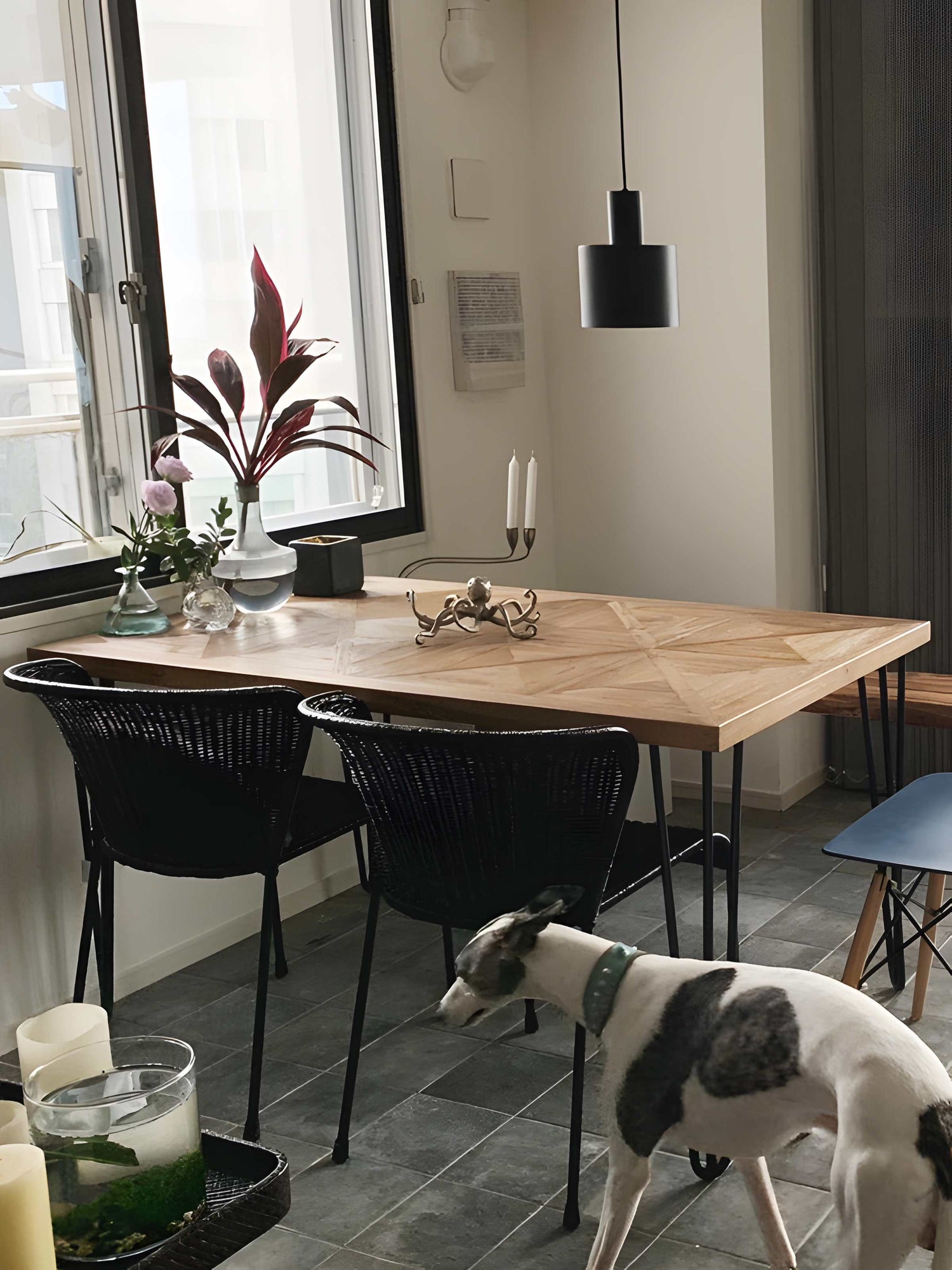
Many UK homes, especially newer builds, flats and terraces, have compact dining spaces or an open-plan kitchen diner. In a smaller room, slim armless chairs and a bench along one side let you seat more people without crowding, and the bench slides away when it is not needed.
What makes a dining chair comfortable for long meals?
A gently curved back that follows the line of the spine and a seat depth of around 43 to 48 cm are what keep a chair comfortable for hours, letting you sit back fully rather than perching on the edge. A well-shaped solid wood or woven seat matters more than sheer padding.
If you like a softer landing, a seat pad adds it and lets you change the look with the seasons. A chair that looks lovely but aches after twenty minutes has failed at its one job, so it is worth sitting in one for a few minutes before you decide.

Should dining chairs have arms?
Arms feel generous and work beautifully at the head and foot of a table, but they take up more room and can stop a chair tucking fully under a table with a low apron, so check that the arms clear the underside of your tabletop before you buy.
If space is tight, choose armless chairs, or use arms only at the two ends and armless chairs along the sides. That gives the table a sense of occasion without crowding the room.
Wood or upholstered dining chairs: which is better?
Neither is simply better. Upholstered chairs feel soft and warm, which suits a cold UK winter, while solid wood and woven chairs wipe clean, do not trap pet hair and age beautifully, which suits busy homes and pets. Many people choose a wood chair and add a washable seat pad for the warmth of both.
We weigh up comfort, style, durability, cleaning and cost in detail in our full guide to upholstered vs wood dining chairs.
Which wood is best for a dining chair?
Solid hardwood lasts longest and can be refinished, unlike the veneered or part-composite boards used in many mid-range and flat-pack chairs. Oak is the familiar solid choice, hard and handsome but heavy and priced to match, while beech, ash and rubberwood turn up in many cheaper ranges.
Beyond oak, some of the world's finest furniture wood grows in the tropics, and Indonesia has a centuries-old tradition of working it by hand. Teak is the name most people know, prized for its natural oils, warm tone and decades of durability. It sits alongside sungkai, a light, golden wood with a calm, straight grain that suits modern and Scandinavian rooms, and mindi, sometimes called Indian mahogany, a little denser and warmer in tone. All three are solid wood rather than veneer, hand-finished by skilled makers, and can be certified sustainable under Indonesia's SVLK scheme.
Going deeper on materials? Read our guides to teak, sungkai and mindi wood, plus solid wood vs veneer and teak vs oak.

How do I care for wooden dining chairs in a centrally heated home?
Solid wood copes well with a warm home when looked after. In winter, keep chairs a little away from radiators so the wood does not dry too quickly, dust regularly, wipe spills promptly, keep them out of strong direct sun, and give solid wood an occasional feed of a suitable oil or wax.
Underfloor heating, which is increasingly common in new build homes, is if anything kinder to wood than radiators, because it warms the room evenly at a low temperature with no hot spot for a chair to sit beside. The only thing to watch is the same winter dryness, so keep the room from getting too dry. Do that and these chairs outlast almost anything flat-packed, and can be refinished to look new again years down the line.
Which dining chair style suits my home?
Start from the look of your room and let the wood tone follow, because colour does much of the work. Pale woods feel calm and modern, warm mid-tones feel classic and homely, and darker or more textured finishes feel grounded and characterful. Here is how the most popular looks tend to translate into a chair.
- Scandinavian and minimalist: light, pale woods such as sungkai, with clean lines and slim frames. A cross-back, spindle-back or woven seat keeps the room airy and uncluttered.
- Modern farmhouse: warm, honeyed mid-tones and softer, rounded shapes. A curved-back chair or a natural rattan seat feels welcoming and lived-in.
- Rustic and industrial: deeper, richer wood tones, fuller frames and darker metal detailing. Sturdier silhouettes give the room a grounded, characterful feel.
- Wabi-sabi: natural, matte and quietly imperfect. Raw-textured or reclaimed wood in muted tones celebrates the grain and the marks of the hand.
Whichever look you lean towards, a solid wood chair carries its own grain and gentle variation, so no two are quite alike, which is part of the appeal of something handcrafted rather than mass-produced.

Can I mix different dining chairs, or chairs and a bench?
Yes, and it often makes a room feel warmer and more collected than a matching set. Keep the seat heights level so everyone sits at the same line, keep the wood tones and visual weight in the same family, and combine just two styles in equal numbers if you are new to the look.
Armchairs at the head and foot with lighter chairs along the sides is a timeless arrangement, and a bench on one long side adds a gathered, informal warmth.
When you are ready, see the full range in our dining chairs collection, each one handcrafted from natural wood to be lived with and gathered around for years.